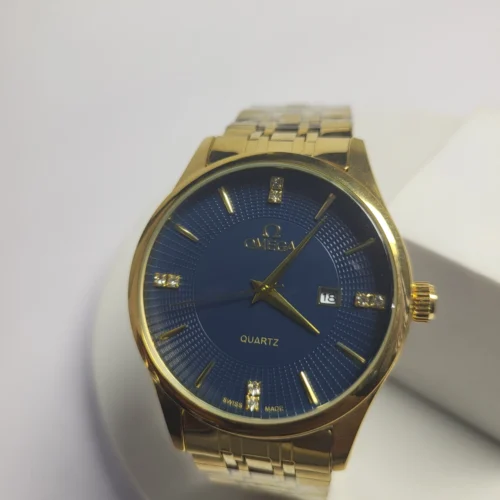
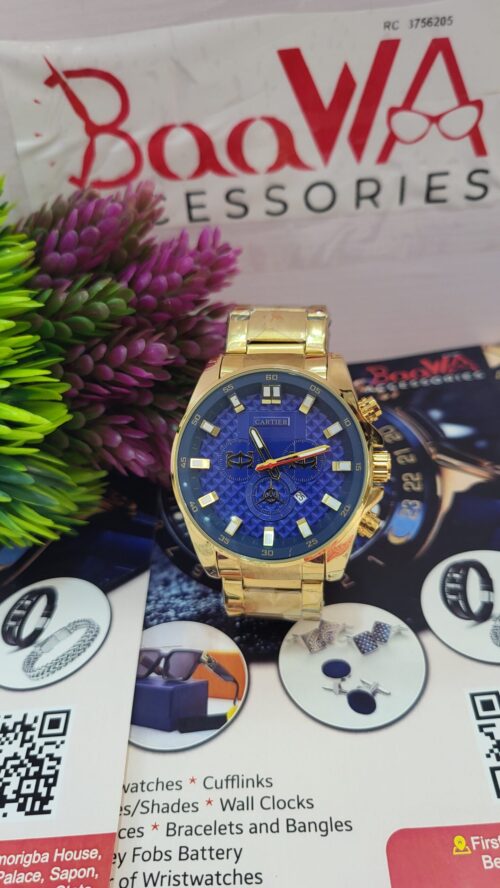
Your signature look is just a click away. Before you go, take a look at these exclusive markdowns on our top-rated wristwatches and designer eyewear.
Premium quality doesn't have to break the bank. Secure your favorite accessories today with safe bank transfers and reliable delivery across all 36 states in Nigeria.
Pick up any wristwatch and look closely at the face. That clear pane shielding the dial is the watch crystal, and the sapphire vs mineral watch glass question quietly decides how long your timepiece keeps looking new.
Most everyday watches sold across Nigeria use one of two glass types. The choice between them shapes how scratches show up, how clearly the dial reads under harsh sun, and how much you pay at the till.
Read on for a plain English breakdown of the sapphire vs mineral watch glass debate, with practical tips for buyers in Lagos, Abuja, Port Harcourt, and beyond.
What Watch Glass Actually Does
The watch crystal is the see-through cover that sits over the dial. It guards the hands, indices, and the movement underneath from dust, sweat, accidental knocks, and the everyday bumps that come with wearing something on your wrist all day. The clearer it stays after months of wear, the longer your watch keeps that fresh-from-the-box look. Cheap glass scratches under normal use, while harder material shrugs off most everyday encounters. If you are shopping Premium Watches, the crystal quality is one of the quiet markers that separates a forgettable piece from one you keep for years.
Some buyers fixate on the strap, dial colour, or case size, and forget to ask what kind of glass sits on top. That oversight shows up six months later as a faint web of marks that catch the light at the wrong angle, especially under fluorescent office lighting where every scratch becomes visible to anyone sitting across from you.
Knowing the difference up front saves you money. It also helps you spot a fair price when a seller quotes you. A watch with sapphire should cost more than the same model with mineral, and a discount that seems too good usually means a downgrade you cannot see from across the counter. Sellers across local markets and online stores sometimes label both crystals simply as “glass”, so being able to ask the right follow-up question changes the conversation entirely and protects your wallet.
Sapphire Crystal: Hard, Clear, Built to Last
Sapphire crystal is made from synthetic sapphire, a lab-grown version of the same hard stone used in jewellery. It scores 9 on the Mohs hardness scale, just one step below diamond. That hardness is the headline. Only diamond and a few other materials can leave a mark on it under normal wear. Your keys, zips, belt buckles, and metal desk surfaces will not bother it. Even a year of daily desk work, where the watch slides across hard surfaces every few minutes, leaves a sapphire crystal looking the same as the day you unboxed it from the brown delivery box.
The clarity is also excellent. Sapphire has high light transmission, so the dial pops crisply even in bright sunlight, which matters during a long Lagos afternoon. Many sapphire crystals also receive an anti-reflective coating that cuts harsh glare further, giving the dial a clean, glassy look from any angle. According to authoritative materials science references, synthetic sapphire has been used in watchmaking for many decades precisely because of these scratch and clarity benefits.
The trade-off is brittleness and cost. Sapphire is very hard, but a sharp impact on a tile floor can crack it, and replacements cost more than mineral. You will find sapphire on most pieces in the Men’s Luxury Watches collection, and the upgrade is part of why those watches feel different on the wrist. The look-through-clean-glass feeling is subtle, but once you experience it, going back to scuffed mineral becomes a small disappointment every morning when you check the time.
Mineral Crystal: Affordable and Easy to Replace
Mineral crystal is a heat-treated glass, harder than the everyday window glass on your kitchen door but softer than sapphire. It sits at around 5 on the Mohs scale, which means it resists casual scuffs from soft surfaces, but small marks build up after months of regular wear. After a year of daily use, you might count five or six fine lines under a lamp held at an angle.
The upside is value. Mineral crystal keeps a watch affordable, and that is why most pieces under fifty thousand naira ship with it. The glass is also cheaper to replace if it breaks, which any street-corner watch repairer in Yaba or Wuse can handle within a day for a few thousand naira. For someone buying a first proper wristwatch, this matters more than people admit, because accidents happen during commutes and pricey repairs sting harder than the original purchase.
Clarity on a good mineral crystal is fine for daily use, though it does not match sapphire side by side. Mineral crystal also handles small impacts a little better than sapphire because it flexes rather than shatters outright. So if you live an active life with the occasional knock against a wall or steering wheel, mineral can actually outlast sapphire in practice. The Automatic Watches range mixes both materials so you can compare them in hand before buying.
Sapphire vs Mineral Watch Glass at a Glance
Feature
Sapphire Crystal
Mineral Crystal
Hardness (Mohs)
9
About 5
Scratch resistance
Excellent
Moderate
Shatter resistance
Lower
Higher
Clarity under sun
Very high
Good
Cost
Higher
Lower
Replacement ease in Nigeria
Limited, specialist needed
Easy and quick
Common on
Luxury and premium pieces
Casual and budget pieces
Which One Is For You?
If you are a corporate professional building a long-term collection, sapphire is the better long-game pick. It keeps the dial spotless through boardroom handshakes, daily desk wear, and the occasional weekend owambe where everyone is shaking hands and posing for photos. The higher upfront cost stretches across years rather than months. Pieces in Women’s Luxury Watches nearly all carry sapphire because the audience expects a watch that still looks new on its third birthday.
If you prefer rotating a few watches or you are gifting someone their first proper timepiece, mineral crystal is perfectly fine. The lower cost lets you buy more variety, and small scuffs after a year of wear are easy to live with. A solid look at the broader history of wristwatch development shows mineral crystal has been the workhorse for everyday timekeeping for generations, and it earned that spot honestly through service and savings.
Think about how rough your daily routine is on accessories. People who work in the field, swap watches often, or care more about style refresh than long-term shine should lean mineral. People who want one or two pieces that age well should pay the sapphire premium. There is no shame in either choice. Match the crystal to the life you actually live, and your watch will reward you with years of clean, frustration-free reading time every time you glance down at your wrist.
Wrap-up
Watch glass is one of those small details that quietly shape how a timepiece ages on the wrist. Sapphire wins on hardness and clarity. Mineral wins on price and shatter behaviour. Neither is right for everybody, and the better answer always comes back to how you live and what you can spend.
Hold the watch under good light, ask the seller what crystal it carries, and choose based on how you actually live week to week. Ready to upgrade to a piece that holds its looks for years? Browse the curated selection in Premium Watches for sapphire-grade options that fit a Nigerian budget.