
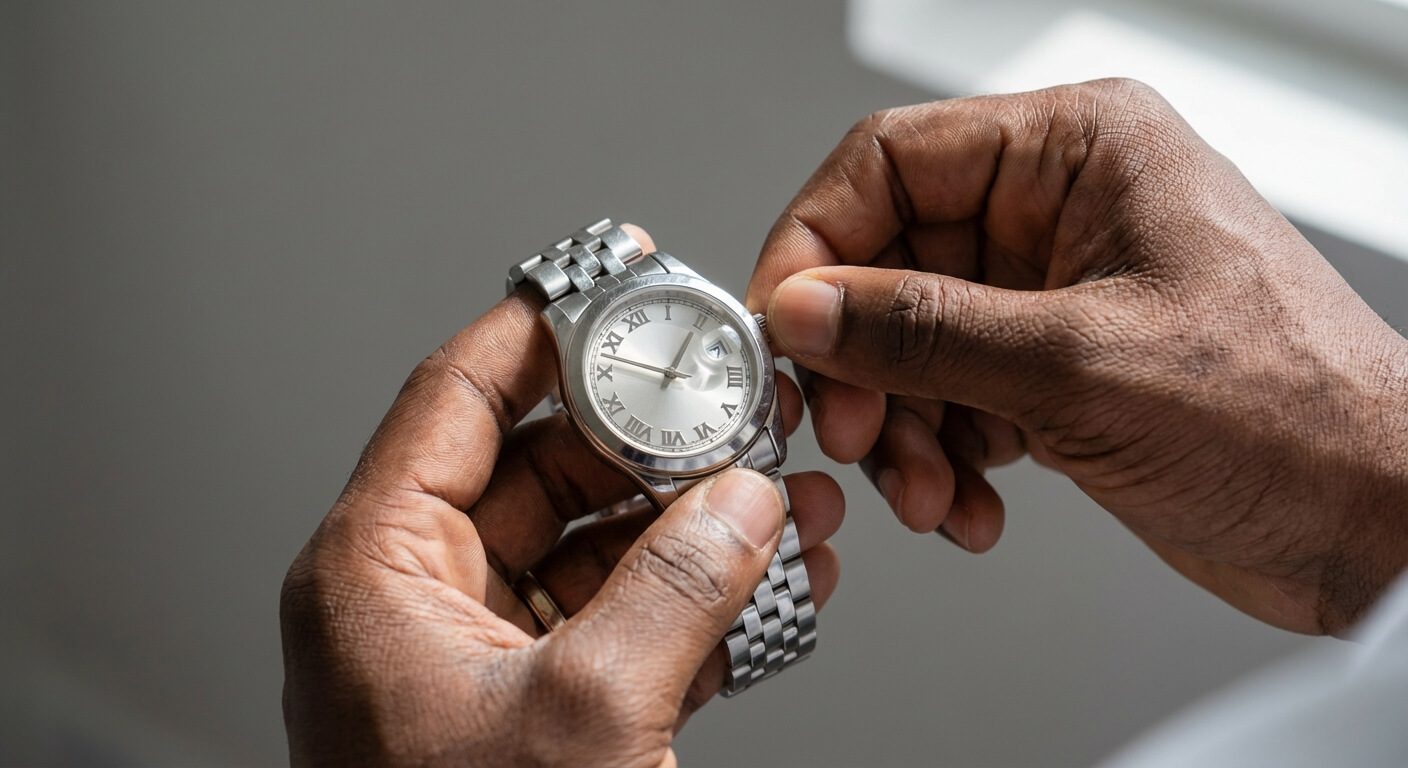
That excitement when you finally save up enough to buy a quality timepiece. You picture yourself walking into a meeting, sleeve rolled just right, watch gleaming on your wrist. Then reality hits: the watch you bought for “original price” starts losing time after two weeks. The gold plating peels. The strap breaks.
Nigeria’s watch market is flooded with counterfeits. From busy markets in Lagos to online stores promising “authentic luxury,” fake watches have become so sophisticated that even experienced buyers get fooled. The frustrating part is that you cannot always tell the difference just by looking.
This guide gives you a practical checklist to protect yourself before you hand over your hard-earned money. Every tip here comes from real scenarios Nigerian buyers face daily, and by the end, you will know exactly what to look for, what questions to ask, and which red flags should make you walk away.
Why Fake Watches Are So Common in Nigeria
The demand for stylish watches in Nigeria has never been higher. From young professionals wanting to make an impression to business owners who understand the power of a good first impression, watches remain one of the most sought-after accessories. This high demand, combined with limited access to official brand stores, creates perfect conditions for counterfeiters to thrive.
Most fake watches enter Nigeria through unofficial import channels. Some look almost identical to the real thing on the surface, but the materials, movements, and craftsmanship tell a different story. The consequences go beyond wasted money. A watch that stops working during an important meeting or one that turns your wrist green damages your confidence and your image.
Understanding where these fakes come from helps you stay alert. Markets, social media vendors with suspiciously low prices, and even some physical stores stock counterfeits alongside genuine pieces. The sellers often do not even know the difference themselves.
The Weight and Feel Test
Genuine quality watches have a certain heft to them. This is one of the first things you should check, and it requires no expertise at all. Pick up the watch. Does it feel substantial? Or does it feel like something you would find in a children’s toy section?
Authentic timepieces use materials like stainless steel, sapphire crystal, and quality leather or metal for straps. These materials add weight. Counterfeit watches typically use cheaper alloys, plastic components disguised as metal, and thin glass instead of crystal. The difference is noticeable once you know what to feel for.
Run your fingers along the edges of the case. Quality watches have smooth, precise finishing. If you feel rough edges, uneven surfaces, or anything that catches your skin slightly, that is a warning sign. The details matter because manufacturers who cut corners on finishing almost certainly cut corners on the movement inside.
Examine the Movement and Second Hand
The movement is the heart of any watch, and observing the second hand can tell you a lot about what is inside. On most quality quartz watches, the second hand moves in smooth, precise ticks. On mechanical watches, the sweep is continuous and fluid, almost like the hand is gliding around the dial.
Fake watches often have jerky, inconsistent second hand movements. The ticking might be uneven, or the hand might pause slightly at certain points. This happens because counterfeiters use the cheapest movements available, often ones that cannot maintain consistent power delivery.
If the seller allows it, ask to see the caseback. Some watches have transparent backs that let you see the movement. A genuine quality movement will have fine finishing, proper jewels, and engraved markings. Counterfeit movements look rough, with visible tool marks and generic, sometimes misspelled, engravings. According to the Federation of the Swiss Watch Industry, genuine Swiss movements must meet strict quality standards that counterfeits simply cannot replicate.
Check the Dial and Printing Quality
Bring the watch close to your eyes and look at the dial carefully. Every letter, number, and logo on a genuine watch will be perfectly printed. The fonts are consistent, the spacing is exact, and the colours are uniform. Counterfeiters struggle to replicate this level of precision.
Look for these specific issues: smudged text, uneven letter spacing, misaligned logos, or printing that looks slightly fuzzy at the edges. The date window, if present, should display numbers that are perfectly centred. A number that sits too high, too low, or at an angle indicates poor quality control.
Brand logos deserve special attention. Compare what you see with official images from the brand’s website. Counterfeiters often get small details wrong. A crown logo might have the wrong number of points. Letters might be slightly thicker or thinner than they should be. These differences seem minor until you know to look for them.
Verify the Seller’s Reputation and Documentation
Where you buy matters as much as what you buy. A seller with a physical location, a verifiable business registration, and a track record of satisfied customers presents far less risk than an anonymous social media account.
Ask for documentation. Genuine watches come with warranty cards, certificates of authenticity, user manuals, and proper packaging. The paperwork should match the watch’s serial number. If a seller cannot provide these documents or offers excuses about why they are missing, treat that as a major red flag.
Customer reviews and testimonials provide another layer of verification. Look for reviews that mention specific details about the buying experience, the product quality, and the after-sales service. Generic, overly positive reviews with no specifics often come from fake accounts. Trusted retailers like BaaWA Accessories maintain their reputation by ensuring every piece they sell meets quality standards and comes with proper documentation.
Price as a Warning Signal
If a deal looks too good to be true, it almost always is. Quality watches cost what they cost because of the materials, engineering, and craftsmanship involved. A seller offering a watch at 70% below market price is not giving you a bargain. They are selling you a fake.
Research the typical price range for the watch you want before you start shopping. The Hodinkee Watch 101 Guide provides excellent resources for understanding what different types of watches should cost. When you have this knowledge, you can immediately spot prices that do not add up.
Some sellers justify low prices with stories about “wholesale connections” or “customs seizures.” These narratives are almost always fabricated. Legitimate businesses cannot sustainably sell genuine products at prices that would put them at a loss.
Your Pre-Purchase Checklist
Before you pay for any watch, run through this checklist:
- Weight test: Does the watch feel substantial and well-made?
- Finishing inspection: Are all edges smooth with no rough spots?
- Second hand observation: Does the movement appear consistent and precise?
- Dial examination: Is all text perfectly printed with proper spacing?
- Logo verification: Does the brand logo match official images exactly?
- Documentation request: Can the seller provide warranty cards and certificates?
- Price comparison: Is the price within the normal market range?
- Seller verification: Does the seller have a physical address and positive reviews?
Going through these steps takes only a few minutes but can save you from weeks of regret. Make it a habit every time you consider buying a watch.
Wrap-up
Protecting yourself from fake watches requires a combination of knowledge and vigilance. The counterfeit market thrives because buyers often do not know what to look for until it is too late. With the checklist above, you now have practical tools to separate genuine quality from clever imitations.
A quality watch is an investment in your image and confidence. It deserves the same careful consideration you would give any significant purchase. Take your time, ask questions, and never let pressure or excitement override your judgment.
Ready to shop with confidence? Browse the collection of authentic watches in Nigeria at BaaWA Accessories, where every timepiece comes with proper documentation and quality you can trust.
